
Sicilian pasta tells the story of the island through durum wheat, traditional shapes and recipes that form part of its culinary heritage. Renda’s selection includes artisan Sicilian pasta in the form of short and long Trapanese busiate, squid ink busiate and Sicilian anelletti, all made with wheat grown and milled in Sicily. Different shapes for different uses, ideal with Trapanese pesto, Mediterranean sauces, seafood condiments and classic Sicilian baked pasta recipes.
Buy Sicilian pasta online: artisan tradition and Sicilian wheat
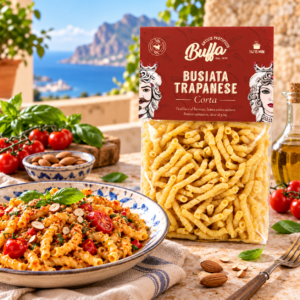 Pasta plays a central role in Sicilian cuisine and changes shape according to the territory and the recipe. Busiate and anelletti represent two artisan traditions of the island, from Trapani-style dishes served with pestos and sauces to rich baked pasta timbales.
Renda’s selection offers artisan pasta made with durum wheat semolina obtained from wheat grown and milled in Sicily. Bronze-die extrusion and slow drying contribute to the characteristics of the pasta and its ability to hold sauces effectively. Raw ingredients and artisan processing enhance each shape, creating pasta suited to the many different expressions of Sicilian cuisine.
Sicilian pasta shapes selected for you
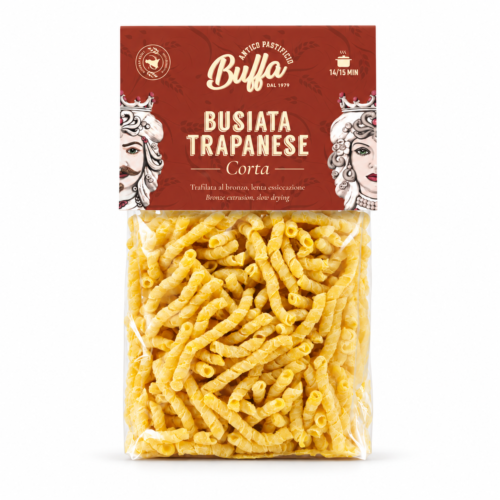
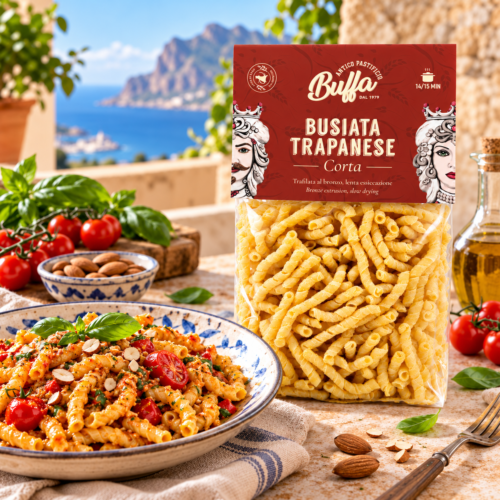
The short Trapanese busiata reproduces the characteristic twisted shape of Trapani tradition in a practical format. Its rough surface and spirals help capture pestos and sauces. Trapanese pesto is its most traditional pairing, but it can also be served with tomato, pistachio, vegetables and seafood sauces.
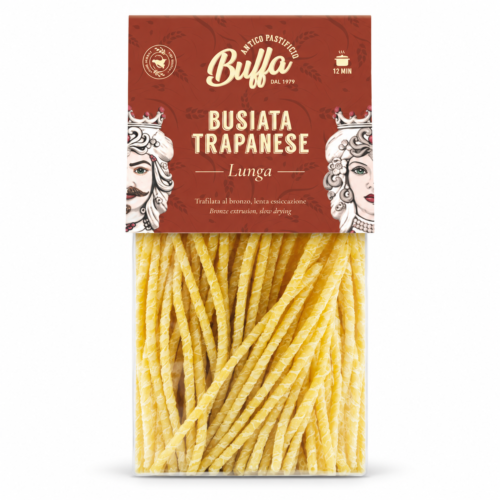
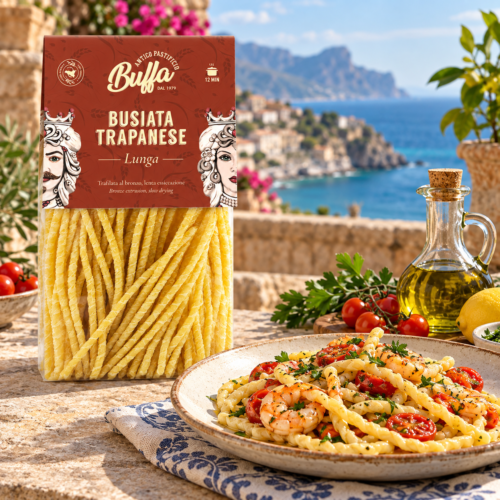
The long Trapanese busiata retains the same twisted structure in a longer and more distinctive shape. Sauces spread along the entire surface of the pasta, making it particularly suitable for pestos and creamy condiments. It is an artisan pasta shape closely connected with Trapani tradition, ideal for bringing one of western Sicily’s most recognisable first courses to the table.
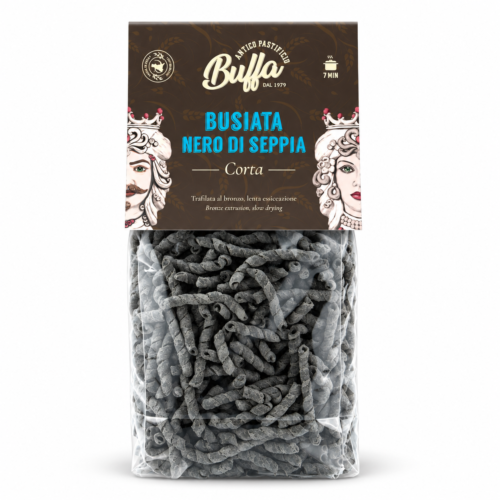
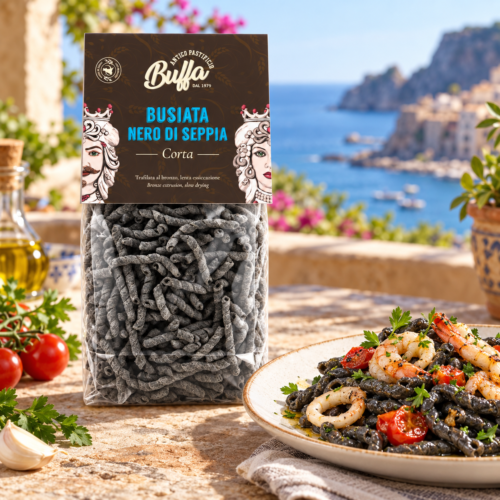
The squid ink Trapanese busiata combines the traditional Trapani shape with an ingredient characteristic of seafood cuisine. Its dark colour and marine note make it particularly suitable for sauces with fish, shellfish and molluscs. It is the ideal choice for seafood first courses, where the pasta and sauce can share the same Mediterranean character.
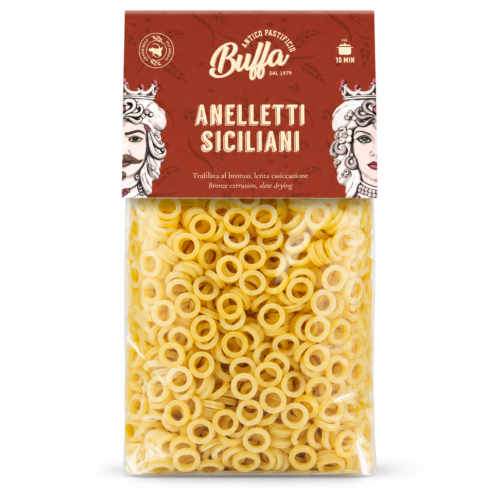
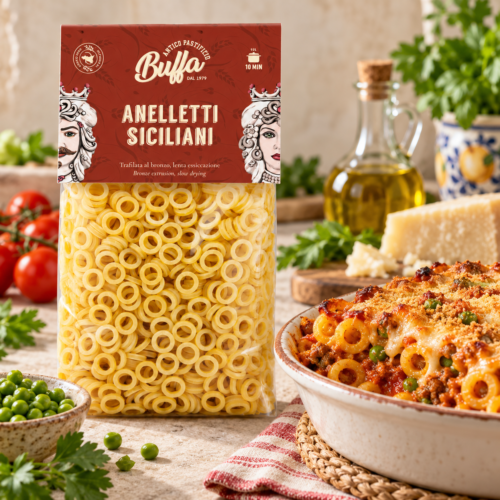
Sicilian anelletti have a small ring shape and are traditionally associated with baked pasta dishes. They hold ragù, peas, cheeses and other ingredients particularly well during cooking. They are the signature shape of Sicilian baked pasta, used for timbales and recipes that vary slightly from one area and family tradition to another.
Busiate or anelletti: which pasta should you choose?
Busiate are particularly suitable when the pasta is served with a sauce that needs to cling well to the surface. Their twisted shape enhances pestos and sauces, making both the short and long versions suitable for a wide range of Mediterranean dishes.
Anelletti have a completely different purpose and find their most traditional expression in baked recipes. Their compact shape allows the pasta to combine well with the sauce and maintain an even structure within a timbale. The choice therefore depends on the type of recipe, rather than simply on a preference for shape.
How to use Sicilian pasta in the kitchen
Trapanese pesto is one of the most natural pairings for busiate. Tomatoes, almonds, basil, Nubia red garlic and extra virgin olive oil create a sauce deeply connected with the cuisine of the area. Just a few Sicilian ingredients are enough to create a complete first course, allowing the shape of the pasta to capture the pesto.
Busiate also work well with pistachio pesto, tomatoes, capers, vegetables and seafood sauces. The squid ink version can be paired with prawns, molluscs or other seafood ingredients. Artisan pasta becomes a versatile base for Mediterranean flavours, without requiring overly elaborate preparations.
Anelletti are instead intended mainly for baking, where they can be combined with ragù, peas, cheeses and other ingredients according to the chosen recipe. Baking is their most traditional use, creating a rich dish with an important place in Sicilian family cooking.
Trapani and the tradition of Sicilian pasta
Busiate are particularly representative of western Sicily and the Trapani area, where they have become one of the most recognisable pasta shapes. Artisan tradition meets local recipes, beginning with Trapanese pesto and the Mediterranean sauces that characterise the cuisine of the area.
Anelletti represent a different tradition found in other parts of the island, especially that of baked pasta. Different shapes reveal the variety of artisan Sicilian pasta, bringing together seafood first courses, pestos, sauces and baked recipes through one common raw material: Sicilian durum wheat.